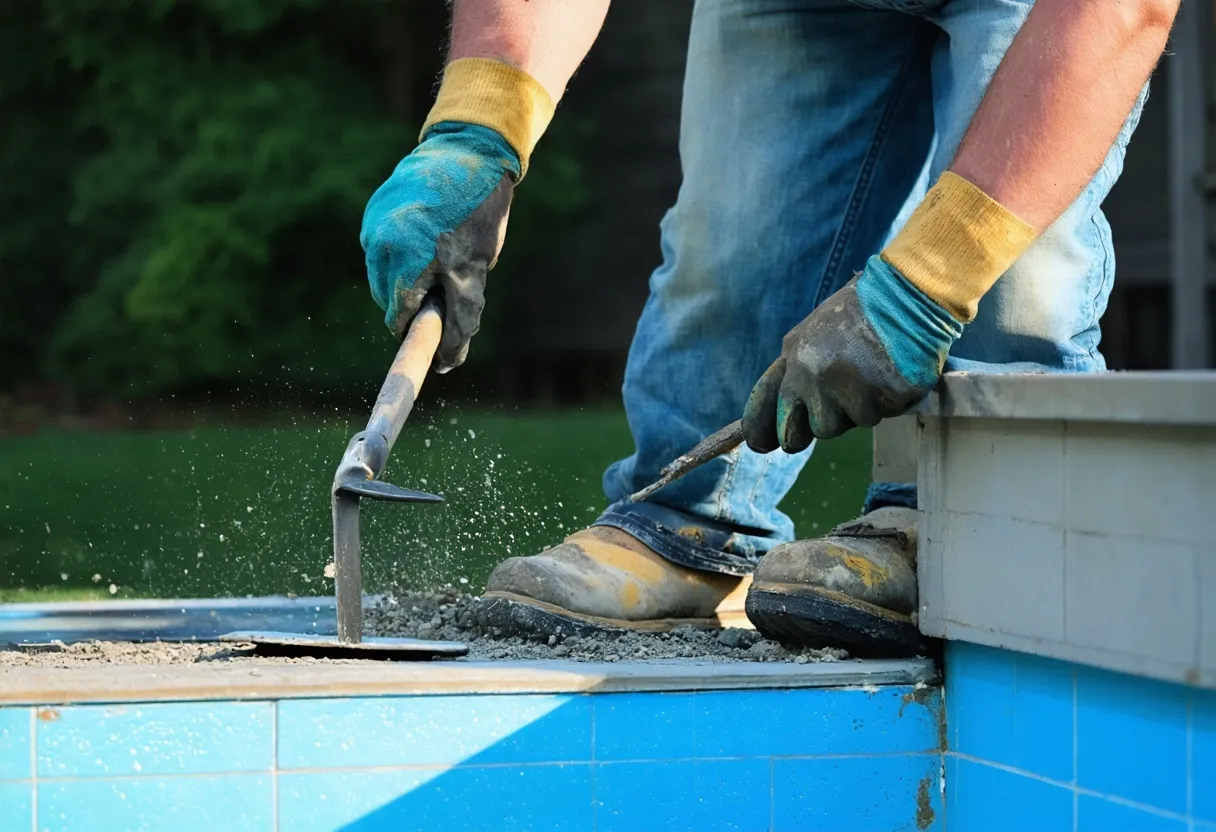
If your gunite pool is cracking at the waterline, your vinyl liner is wrinkling and fading, or your fiberglass shell has lost its shine, you're looking at a renovation decision, not just a repair bill. Pool renovation and repair in Greenville, SC is a different discipline than new construction — it means working around existing plumbing, matching decades-old equipment to modern systems, and often correcting problems that Upstate soil and grading created in the first place. This page walks through what a real renovation or repair project involves here, what it costs, how permitting and terrain factor in, and how to choose a contractor who won't leave you with the same problems in five years.
Whether you're in Greenville proper, out toward Simpsonville or Taylors, or up in the Spartanburg area, the same core issues show up again and again: aging plaster and pebble finishes, tired vinyl liners, outdated single-speed pumps, and decks that have heaved or settled because of how Piedmont clay behaves under a slab. We work across the Upstate — Greenville, Mauldin, Greer, Anderson, Fountain Inn, and neighboring communities — and every renovation quote accounts for the soil and grading conditions specific to where your pool actually sits.
01What "Pool Renovation and Repair" Actually Covers
The term gets used loosely, so it's worth breaking apart. Renovation and repair work generally falls into a few categories, and most projects combine more than one:
- Surface renovation — replastering or re-pebbling a gunite pool, replacing a vinyl liner, or repairing gelcoat and structural cracks in a fiberglass shell.
- Structural repair — fixing cracked shells, addressing settling or shifting, repairing plumbing leaks below the deck, and correcting drainage issues that undermine the pool structure over time.
- Equipment modernization — swapping outdated single-speed pumps, old sand filters, and manual chlorinators for variable-speed pumps, cartridge or DE filtration, and automated controls.
- Sanitization conversion — converting a traditional chlorine pool to a saltwater chlorination system, or upgrading to UV or ozone secondary sanitization.
- Decking and hardscape restoration — replacing cracked or spalled concrete decking, adding pavers or travertine, and rebuilding coping that's separated from the pool shell.
- Feature additions — adding or renovating an attached spa, water feature, sun shelf, or lighting package during a broader remodel.
Most of the pools we're called out to renovate in this market are somewhere between 10 and 30 years old. At that age, the original equipment is well past its efficient lifespan, the surface finish has typically reached the point of etching or staining, and the deck has usually shown some effect of ground movement. Renovation is the point where you decide whether to patch the existing problem or fix it at the source — and that decision is where an experienced local contractor earns their fee.
02Pool Types: Gunite, Vinyl, and Fiberglass — Renovation Realities for Each
Gunite (Shotcrete) Pools
Gunite pools are the most common renovation candidate because the surface — plaster, pebble, or quartz aggregate — has a finite lifespan, typically 10 to 20 years depending on water chemistry and finish type. Renovation usually means draining the pool, acid-washing or chipping out the old surface, patching any structural cracks in the shell, and applying a new finish. This is also the ideal time to replace aging plumbing lines, add or reposition returns and skimmers, and correct any structural cracking that's tied to shifting soil beneath the shell — a real issue on Piedmont clay, which expands and contracts more than sandy or well-draining soils. If your gunite pool has stair-step cracking or a shell that's visibly out of level, that's a soil-related structural issue, not a cosmetic one, and it needs to be addressed before a new surface goes on top of it.
Vinyl Liner Pools
Vinyl liner pools are common throughout residential Greenville and the surrounding Upstate communities, largely because they were historically a lower-cost entry point into pool ownership. Liners typically last 8 to 15 years before fading, stretching, or developing seams that leak. Renovation is usually straightforward — drain, remove the old liner, inspect and repair the wall panels and bottom, and install a new liner — but it's also the right time to check the pool's structural walls for rust (on steel-wall pools) or degradation, and to evaluate whether the plumbing and equipment pad need updating at the same time. Because liner replacement requires draining the pool anyway, it's the most cost-effective moment to also convert to a saltwater system or upgrade the pump and filter.
Fiberglass Pools
Fiberglass renovation is less frequent but not rare — gelcoat can fade, blister (osmotic blistering), or crack over time, and the surrounding deck can separate from the shell as the ground settles around it. Fiberglass repair is more specialized than gunite or vinyl work because it requires matching gelcoat colors and understanding how the shell flexes, so not every general pool contractor is equipped to do it correctly. When a fiberglass pool is renovated properly, the shell itself often has decades of life left — the work is usually cosmetic and structural-perimeter repair rather than a full rebuild.
03Pricing and Cost Breakdowns
Renovation pricing varies more than new construction because every project starts from a different baseline. That said, here's how costs generally break down in this market, organized by scope:
- Resurfacing only (plaster/pebble or vinyl liner replacement): the entry tier — covers surface removal and replacement, minor patching, and refill. This is the right scope when the shell and equipment are otherwise sound.
- Resurfacing plus equipment upgrade: adds a variable-speed pump, new filter, and updated automation or salt system on top of the surface work. This mid-tier is where most renovations land, since equipment failure often prompts the renovation decision in the first place.
- Full renovation (surface, equipment, decking, and plumbing): the top tier — includes structural crack repair, deck replacement or resurfacing, full plumbing inspection and repair, and often a feature addition like a tanning ledge or spa. This scope is common on pools 20+ years old where multiple systems are failing simultaneously.
- Spot repair (no full drain-down): the smallest scope — leak detection and repair, equipment replacement, crack injection, or coping repair without a full resurface.
Several factors push a project toward the higher end of its tier: pool size and shape complexity, the condition of the substrate under the deck, whether plumbing needs to be rerouted, and access — a pool with tight side-yard access costs more to renovate than one with open equipment access for material delivery and haul-off. Soil conditions matter too. If a structural crack traces back to expansive clay movement, the fix isn't just patching the crack; it's addressing drainage and, in some cases, underpinning or soil stabilization around the shell, which adds real cost but prevents the same crack from reopening in two years.
We provide itemized, tiered quotes so you can see exactly what's driving the number — not a single lump sum. That transparency matters most on renovation work, where "surprise" costs (a rotted return line found once the deck is opened up, for example) are common enough that a contractor who won't itemize scope is a red flag.
04Financing Options
Pool renovation is a significant expense, and most homeowners in the Greenville area finance at least part of it. Common paths include:
- Home equity loans or HELOCs — often the lowest-rate option for homeowners with equity, since the loan is secured by the property.
- Specialty pool financing/lenders — unsecured loans through lenders that specialize in pool projects, typically with faster approval than a home equity product but higher rates.
- Contractor-arranged financing — some renovation contractors offer financing partnerships with set terms; useful for comparing an all-in monthly payment against other options.
- Cash/savings with phased scope — for homeowners who'd rather avoid financing, phasing a renovation (surface and equipment now, decking next year) is a legitimate way to spread cost without borrowing.
The right choice depends on your equity position, timeline, and whether you're bundling renovation with other home projects. We walk through financing comparisons as part of the initial consultation so the number on your quote is one you can actually plan around, not just a sales figure.
05Design and Customization During Renovation
A renovation is a natural point to change things you never liked about the original design — not just restore it to factory condition. Common customization requests we see include extending a sun shelf or tanning ledge into the shallow end, adding accent lighting or color-changing LEDs, upgrading coping and waterline tile, adding a raised wall or water feature, and reshaping decking to open up more usable patio space. Because you're already draining the pool and opening up the equipment pad for surface and system work, this is the most cost-efficient time to make structural changes — doing them later, once the pool is refilled and operating, means paying for a second drain-down and remobilization.
06Permitting and Soil/Terrain Conditions in the Greenville Area
This is where a lot of renovation projects go sideways with contractors who aren't local. Greenville sits in the Piedmont region, and the clay-heavy soil here behaves differently than the sandy coastal soils many national pool companies are used to working with. Clay expands when wet and contracts when dry, and that movement is a common root cause of shell cracking, deck heaving, and coping separation — especially on pools built without adequate compaction or drainage planning around the shell.
Any renovation that touches structural elements — shell repair, deck replacement, spa additions, or plumbing rerouting — typically requires permitting, and the specific requirements depend on whether your property falls under the City of Greenville or unincorporated Greenville County jurisdiction. That distinction matters: setback requirements, barrier/fencing code, electrical bonding requirements for equipment, and inspection sequencing can all differ between the two. A contractor working across this market needs to know which jurisdiction applies to your address and pull the correct permits before, not after, work starts — unpermitted structural renovation work can create real problems at resale.
Grading is the other half of the equation. Before any surface or structural renovation begins, we assess drainage around the existing pool — where water pools during heavy rain, whether the original grading directs water away from the shell, and whether the deck's settling pattern points to a soil issue rather than a workmanship issue. Fixing the surface without fixing the drainage that caused the problem is the single most common mistake we see in prior renovation work done by out-of-area companies.
07Construction Timeline and Process
A typical renovation follows this sequence, though scope changes the timeline:
- Assessment and quote — on-site evaluation of the shell, plumbing, equipment, decking, and drainage, plus a review of your goals for the renovation. This is where we identify whether cracking or settling issues are cosmetic or soil-related.
- Permitting — for any structural scope, we handle permit submission for the correct jurisdiction (city or county) before mobilization. This step can take anywhere from a few days to a few weeks depending on jurisdiction and season.
- Drain and demo — draining the pool and removing the old surface, liner, or damaged decking sections. Water needs to be discharged properly per local code, not just pumped into the yard.
- Structural and plumbing repair — crack repair, plumbing replacement or rerouting, and any drainage correction around the shell.
- Surface, decking, and equipment installation — new plaster/pebble/liner, deck resurfacing or replacement, and installation of upgraded pump, filter, salt system, and automation.
- Startup and water chemistry balancing — refilling, chemical startup (critical for a new plaster surface especially, since improper startup chemistry can etch or stain a brand-new finish within weeks), and equipment testing.
- Walkthrough — reviewing new equipment operation, automation controls, and warranty coverage with you before we consider the project complete.
Surface-only renovations typically run one to two weeks from drain to refill. Full renovations involving decking and structural work commonly run four to eight weeks, largely dependent on permit turnaround and weather — concrete and plaster work both have curing windows that don't compress well in cold or wet conditions.
08Equipment and Automation Packages
Renovation is the single best opportunity to modernize your equipment pad, since it's already being opened up for surface work. A variable-speed pump alone typically cuts pump energy costs substantially compared to an old single-speed unit, and modern automation systems let you control filtration, sanitization, heating, and lighting from a phone rather than a timer box on the wall. For a full breakdown of pump, filtration, and smart automation options and how they pair with a renovation, see our pool equipment and automation guide — it covers the specific packages we install and how to size a system to your pool's volume and usage pattern.
09Saltwater and Sanitization Systems
Converting from traditional liquid or tablet chlorine to a saltwater chlorine generator is one of the most requested upgrades during renovation, and it's most cost-effective to do while the pool is already drained. A salt system generates chlorine on-site from dissolved salt, which generally means softer water and fewer chemical deliveries, though it isn't chemical-free — pH and stabilizer still need regular attention. For pools with specific sensitivity concerns, UV or ozone secondary sanitization can be added alongside a salt or traditional system to reduce chlorine demand further. We'll walk through the tradeoffs of each system relative to your household's usage and maintenance preferences rather than defaulting to a single "best" answer, because the right sanitization setup really does depend on how the pool gets used.
10Decking and Hardscape Renovation
Decking failure is one of the most visible signs a renovation is overdue — cracked or spalled concrete, coping that's pulled away from the pool's bond beam, or pavers that have shifted and settled unevenly. Because Piedmont clay soil moves seasonally, decking is particularly prone to settling unless it was originally poured with adequate base preparation and control joints. Renovation options range from resurfacing existing concrete with a new cool-deck or stamped finish, to a full tear-out and replacement with pavers, travertine, or stamped concrete. If your deck's settling is tied to a drainage issue, we address the grading and drainage as part of the deck renovation — otherwise you're paying to fix the same problem again in a few years.
11Spas and Hot Tubs
Attached spas are a common renovation addition, especially when a pool's surface and equipment are already being redone. Adding a spa during a broader renovation is more cost-effective than doing it as a standalone project later, since it can share plumbing runs, equipment pad space, and permitting with the main pool work. For existing attached spas, renovation typically covers resurfacing to match the pool, jet and plumbing repair, and heater replacement or upgrade — spa heaters see more demand than pool heaters and tend to need replacement sooner.
Get your free quote
Tell us about your property and we'll follow up with next steps — no pressure, no obligation.
Ready to see what your site needs?
Get a free, no-obligation quote built around your property's actual conditions.